Why This?
In many low- and middle-income countries, non-state schools educate a significant share of children from low-income families but often lack essential instructional support. Teachers face large class sizes, scarce resources, and limited professional development, which hinders their ability to deliver quality, differentiated instruction. Without support, children risk inconsistent teaching and weaker learning outcomes.
Why Now?
The urgency of this challenge is stark: globally, only 3 in 10 teachers arrive in class with a prepared lesson plan. In Sub-Saharan Africa, nearly 90 percent of students are not meeting minimum proficiency in reading and math. Strikingly, two-thirds of these children are already enrolled in school but still failing to learn, underscoring a crisis of teaching quality and instructional support.
OUR THEORY OF CHANGE
The AI Teacher Assistant is a scalable edtech tool that helps non-state school teachers deliver adaptive, high-quality lessons in low-income classrooms. Paired with training and mentorship, it supports teachers to consistently generate differentiated lesson plans and strengthen classroom management. The result is measurable improvements in student learning and a clear pathway to advance educational equity through technology-enabled instruction.
Stage of Theory of Change |
AI Teacher Assistant Role |
| Input | AI Teacher Assistant tool introduced to non-state school teachers, alongside training and mentorship support. |
| Output | Teachers generate and use higher-quality, differentiated lesson plans consistently. |
| Outcome | Improved instructional quality and classroom management in non-state schools. |
| Impact | Children in low-income, non-state schools experience stronger learning outcomes and greater educational equity. |
Key Features
Custom Lesson Plans
Delivers high-quality curriculums based on national standards and tailored to each teacher’s specific environment, class size, and requirements.
Differentiated Curriculum
Customizes lesson plans based on student profiles, generating plans that align with individual learning levels and preferred learning styles, using the built-in AI CoPilot.
Smart Teaching Support
Provides quizzes and activities that help teachers deepen their understanding of subjects and creatively teach concepts more effectively to their students.
Addressing the Learning Crisis with AI-Driven Solutions
AI Teacher Assistant empowers teachers in low-income countries where overcrowded classrooms and limited resources hinder learning. It tailors lesson plans to student needs, enhances engagement, and streamlines curriculum planning, ensuring personalized, high-quality education.
Innovation Rooted in Context
Unlike generic AI tools, AI Teacher Assistant is designed specifically for low-resourced schools. It works offline, adapts to overcrowded classrooms, and was shaped through teacher input. This makes it a practical, human-centered solution.
 - Ghana Cisco Trip 2020-scr (5).jpg)
Co-Creation With Teachers
From the start, AI Teacher Assistant has been developed in close collaboration with educators. Innovators Josephine Falconer and Lordina Omanhene led workshops, interviews, and classroom testing to refine the tool with real teacher feedback.
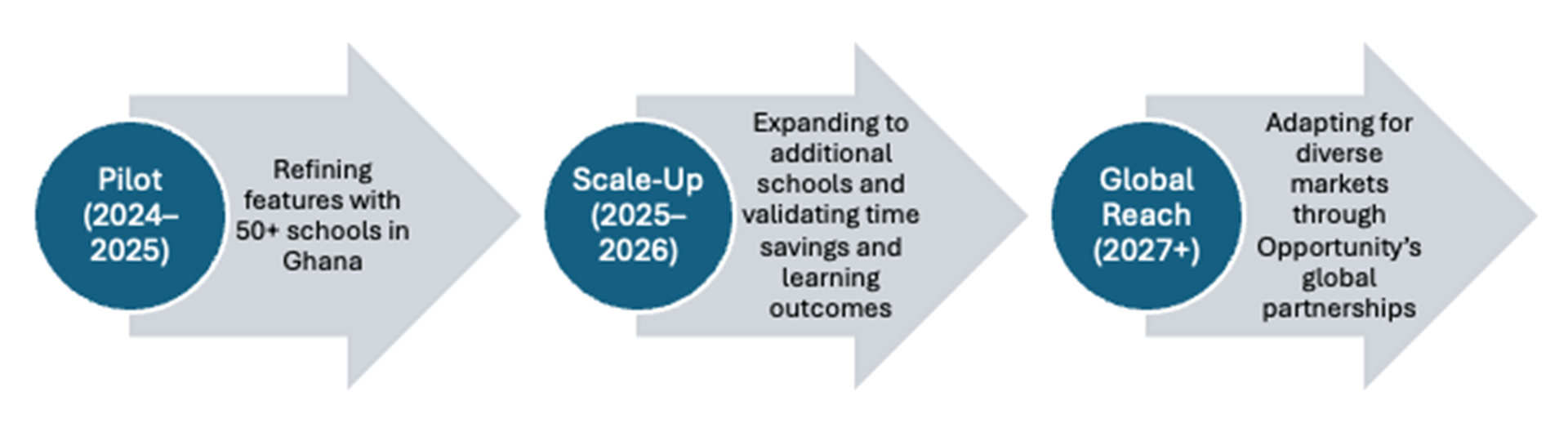
Backed by Experience and Partnerships
AI Teacher Assistant is part of Opportunity International’s CoLab, a digital innovation hub advancing AI solutions in education, agriculture, and livelihoods. With 50 years of experience, Opportunity reaches 3.5 million students annually with access to quality education. Recognition from partners such as Microsoft underscores the trust, expertise, and proven impact behind this innovation.
Why Education Finance
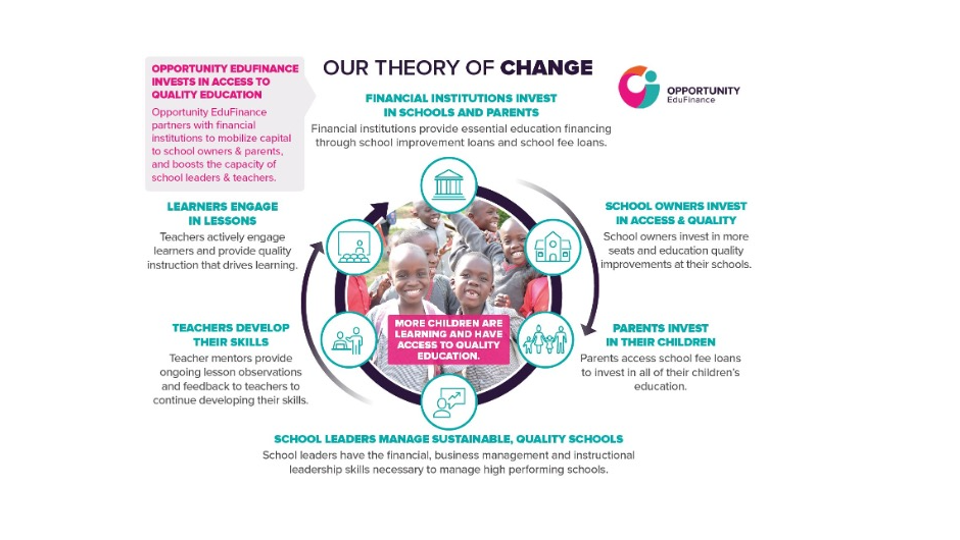
Opportunity International EduFinance works with local financial institutions to design, launch, and scale education lending products that help low-income families pay school fees and improve schools.
Additional Evidence
- How to Design Effective EdTech Solutions: Lessons from Existing Research
- Endline classroom observations find continued improvement in teaching practice quality, with 59% of schools recording improved endline over baseline scores
- Three-year quasi-experimental study finds children gain as much as half a year equivalent of additional schooling